The chefs’ tip for making meat exceptionally tender: add this secret ingredient before cooking.
In the competitive world of professional kitchens, chefs don’t just rely on expensive cuts of meat; they rely on chemistry. While home cooks often reach for salt or store-bought marinades, the “secret ingredient” used by top-tier chefs to transform even the toughest cuts into “butter-tender” morsels is Baking Soda.
This technique, known in professional circles as “Velveting,” is the secret behind the incredibly soft texture of meat found in high-end stir-fries and bistros.
The Science: Why Baking Soda?
Unlike acidic marinades (vinegar or lemon) which can actually “cook” the outside of the meat and make it rubbery if left too long, baking soda is an alkaline.1
- pH Shift: Baking soda raises the pH level on the surface of the meat.2
- Protein Relaxation: This chemical shift makes it more difficult for the proteins to bond together tightly when heated.3
- Moisture Retention: Because the proteins stay relaxed, they don’t “squeeze out” the water during the cooking process, resulting in meat that stays juicy and tender even under high heat.
The “Chef’s Secret” Recipe: The 20-Minute Tenderizing Hack
This method works best for sliced beef, pork, or chicken breasts.
Ingredients
- 1 lb Meat (Sliced into strips or bite-sized pieces).
- 1 tsp Baking Soda (Sodium Bicarbonate).
- 1/4 cup Water.
Instructions
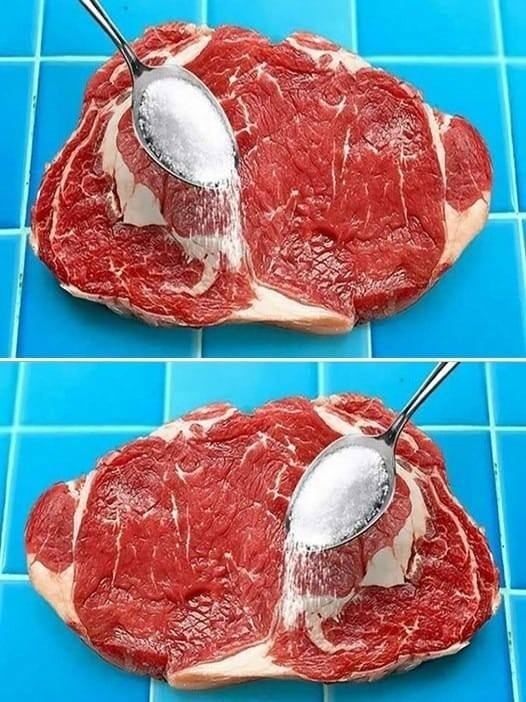
- The Slurry: Dissolve the baking soda in the water in a large bowl.
- The Coat: Add your meat to the bowl and toss thoroughly until every piece is coated in the slick liquid.
- The Timer: Let the meat sit for exactly 15 to 20 minutes. Do not go longer than 30 minutes, or the texture can become too soft.
- The Critical Step (The Rinse): This is the most important part. You must thoroughly rinse the meat under cold running water to remove all traces of the baking soda.4 If you skip this, the meat will have a metallic, bitter taste.
- Pat Dry: Use a paper towel to pat the meat bone-dry before seasoning and cooking.
Comparison: Baking Soda vs. Acidic Marinades
| Feature | Baking Soda (Alkaline) | Vinegar/Lemon (Acidic) |
| Action | Changes protein structure | Denatures/breaks down fibers |
| Texture | Silky, velvety, and plump | Firm, can become “mushy” |
| Time Needed | 15–20 minutes | 2–12 hours |
| Best For | Stir-fry, Fajitas, Sliced Beef | Roasts, Tough Steaks, Stews |
Alternative Secret Ingredients (For Whole Roasts)
If you aren’t slicing your meat and want to tenderize a whole roast or thick steak, chefs use these “biological” secret ingredients:
1. Grated Kiwi or Pineapple
These fruits contain enzymes (actinidin in kiwi and bromelain in pineapple) that literally “eat” through tough connective tissue.
- Chef’s Tip: Use only a small amount for 30 minutes, or your steak will turn into a paste!
2. Plain Yogurt or Buttermilk
The lactic acid and calcium in dairy activate the meat’s natural enzymes to break down proteins gently over 4–6 hours. This is why “Buttermilk Fried Chicken” is so much more tender than standard recipes.
3. Coffee Grounds
The tannins and natural acidity in coffee act as a gentle tenderizer while adding an incredible “umami” depth to the crust of the meat.5
Pro-Tip for Maximum Flavor
After you have “velveted” your meat with baking soda and rinsed it dry, chefs recommend a “Flash Sear.” Because the meat is now primed to hold moisture, you can cook it at a much higher temperature than usual to get a deep, caramelized crust without the fear of the inside drying out.
The Verdict: If you want restaurant-quality meat at home, stop waiting 24 hours for a marinade to work. Use the Baking Soda Method for 20 minutes, rinse, and watch your “cheaper” cuts outshine a prime ribeye.